The Geography of Thin Places
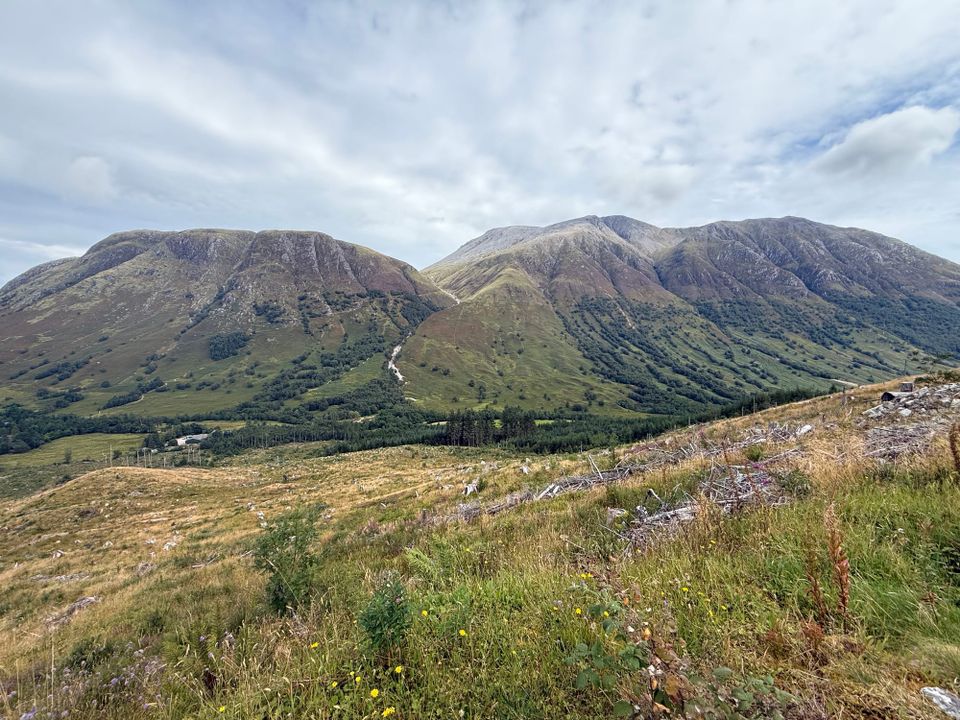
I’m taking the stairs instead of the elevator to the United Lounge at Heathrow. Being self-propelled is instinct now, but with the first step up I feel the fatigue of two weeks spent hiking the Faroe Islands, walking stretches of the West Highland Way, and two days ago, climbing Ben Nevis. Even with the crowds and cloudy weather, that mountain was the perfect capstone to a reverberating, transformative journey.
And somewhere between the mist of Ben Nevis’s slopes and the silence at its summit, I stumbled into what the Celts call a thin place— where the barrier between earth and heaven feels gauze-thin, translucent, almost torn. Each step became a prayer. Each step, part of a conversation with God.
Steps Into the Thin Place
Thin places don’t announce themselves with trumpets. They arrive quietly, in the rhythm of boot on stone, in the hush that follows a break in the clouds, in the sudden awareness that you are not alone. Ben Nevis was crowded that day, yet somehow solitude wrapped itself around me. The mountain was alive with Presence. The more I walked, the lighter the pack on my shoulders seemed, as though I wasn’t carrying it alone.
By the first mile, my companions had stopped to rest. One swatted at midges, another groaned about heavy legs and the long day ahead. I smiled, said I was fine, and kept going. The midges hadn’t touched me, the weight hadn’t pressed me. Instead, I felt light, almost lifted—each step buoyant, each step threaded into something larger. My friends later acknowledged it with grace: “If you’re feeling it, you got to ride it.” Damn right!
For the next two hours I walked mostly alone, save for the brief joy of meeting fellow hikers along the way. Their smiles added fuel to the buzz that already carried me upward. With all combined it was much more than endorphins or fresh legs.
A New Geography of Faith
This communion was all the more striking because it ran counter to the God of my childhood. I was raised in a family of fire-and-brimstone Christians. The message I received was fear: a God ready to punish, a faith ruled by law. While I honor the sincerity of those who walk that path, it never resonated with me.
Over the last year, I’ve come to embrace instead a God of Love—a God who longs for communion rather than compliance. Peeling back sixty-five years of ego-driven striving, I’ve begun to see what was there all along: the spark of divinity God placed in me, in every person, and in all creation. On that mountain, I felt fueled by this shared divinity. Every stone, every cloud, every face I passed carried it.
The Apostolic scriptures are often cited to demand: “Proclaim your salvation and sin no more.” But my faith finds more solid ground in knowing that I am not alone in desiring communion with a loving God who desires communion with me.
Some would say the Celtic imagination leans toward Gnostic waters, with its reverence for mystery and creation. I don’t follow Gnostic paths into their farthest reaches, but I find kinship in their insistence that divinity can be encountered not only in heaven, but here and now. On Ben Nevis, in that thin place, the veil lifted. And what came through was love.
Same Mountain, Different Geography
Closer to the top, the weather turned. Clouds thickened, drizzle settled in. The thin place, though, didn’t falter. One of my companions, the endurance athlete, had caught up and was about to pass me. For him this was all physical terrain—easily within his wheelhouse. As he pushed ahead, he said, “Man, this is miserable. I just want to get this over with.” He sounded almost apologetic for rushing by to finish off Ben Nevis.
Same mountain, same climb, same drizzle—yet entirely different geographies. For him, a slog to just get over. For me, communion. For me, the difference was not in the weather but in the Presence that filled the steps.
The summit itself was shrouded in cloud. I could see no vistas, no grand reward for the climb. Yet it didn’t matter. The mountain had already revealed itself. The thin place was not at the top; it was in the walking, in each prayerful step. The summit was simply a marker, a cairn to acknowledge the journey.
Carrying the Thin Place
Coming down, I rejoined my companions. They were in good spirits, though still quick to point out the discomforts— the rocky footing, the damp, the fatigue. I listened with affection but also with a quiet awareness: I had walked another path that day. The thin place I entered on the way up did not close behind me. It lingered, like a warmth in the chest, like a lamp you carry inside.
That’s the geography that matters most. Not just the mountains, glens, or islands that the Celts sought out, but the terrain within us. After years of striving—of chasing achievement, of being ruled by fear or by ego—I have begun to glimpse another map. A map where thin places open not only on mountaintops but in hearts, in conversations, in the smallest moments of presence.
Two days later, at Heathrow, I felt it again. My body was tired, my pack heavy, but as I took the stairs instead of the elevator, I caught the same rhythm: step, breath, prayer. The mountain had ended, but the prayer had not. Thin places are not just out there, waiting at the edge of the world. They are here, wherever heaven and earth meet, wherever love breaks through the firm ground of our lives.
(Updated April 1, 2026.)